

Mon to Thu 09:00 – 17:30
Fri 09:00 – 17:00
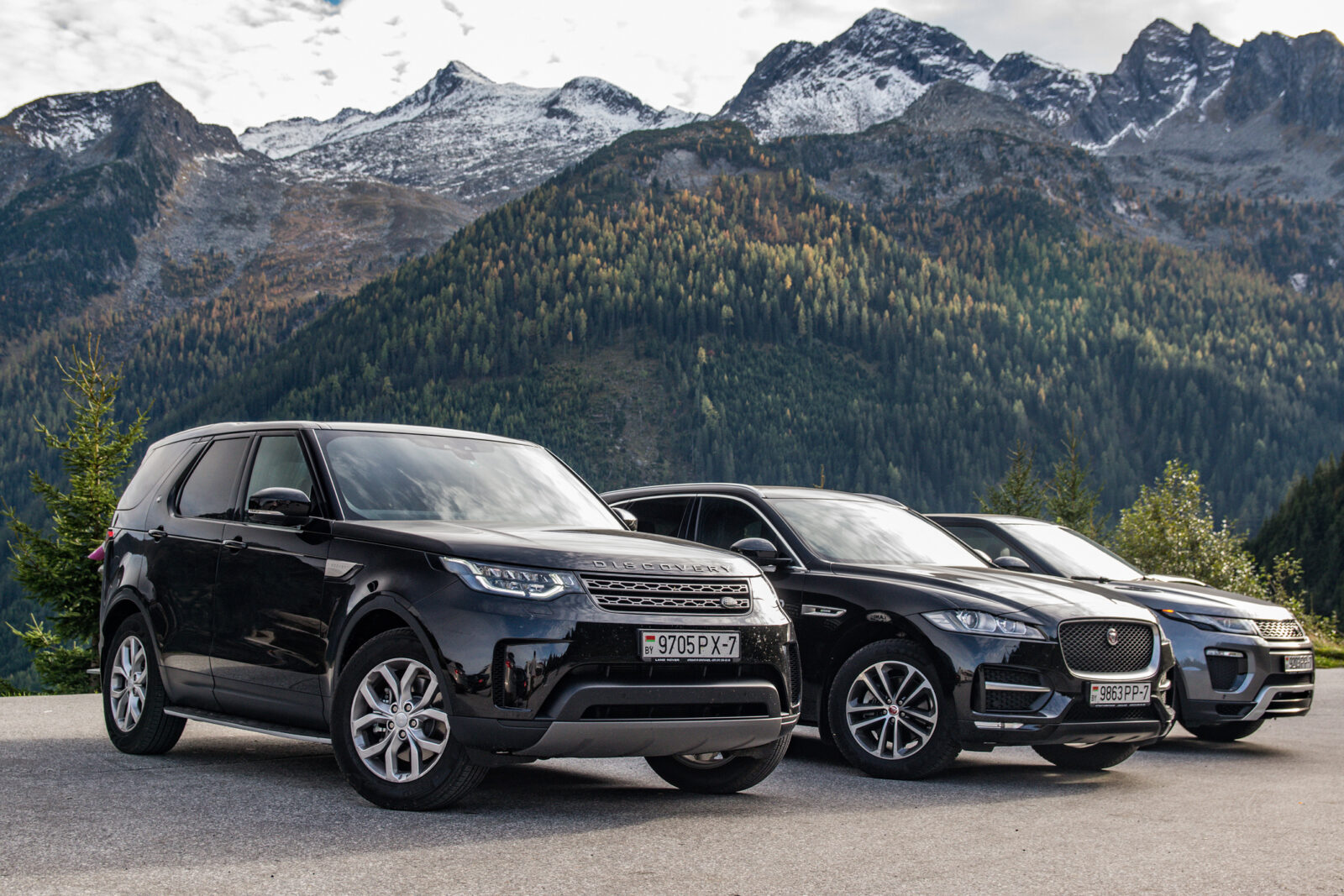
The automotive world is witnessing a remarkable shift towards luxury electric cars, blending opulence with eco-consciousness. As we approach 2025, the market for premium electric vehicles is expanding, offering discerning drivers an array of sophisticated options that combine cutting-edge technology with lavish comfort.
For those looking to experience the pinnacle of electric motoring without the long-term commitment of ownership, leasing presents an attractive option. This guide explores some of the best luxury electric cars available to lease in 2024, showcasing models from renowned manufacturers such as Porsche, BMW, and Jaguar.
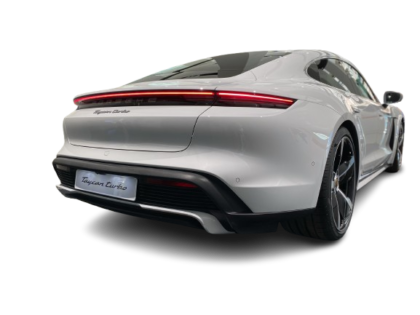
The Porsche Taycan, the brand’s first modern all-electric car, has undergone significant updates to maintain its position as a leader in the luxury electric vehicle market. This model continues to impress with its blend of performance, range, and cutting-edge technology.
The Taycan’s performance credentials are nothing short of remarkable. Even the entry-level rear-wheel-drive model boasts up to 402 horsepower, capable of accelerating from 0-62mph in 4.8 seconds. The recommended 4S variant ups the ante with 500 horsepower, or 590 horsepower in quick bursts, achieving 0-62mph in just 3.7 seconds. This puts it nearly half a second ahead of the Audi E-tron GT quattro.
For those seeking the pinnacle of electric performance, the Turbo S now delivers an astonishing 938 horsepower in Launch Control mode. This translates to a blistering 0-60mph time of 2.4 seconds. The Turbo variant is not far behind, with up to 871 horsepower in Launch Control mode.
The Taycan’s handling prowess sets it apart from other electric vehicles. Its steering offers a better connecion to the road compared to rivals like the Mercedes EQS. The optional rear-wheel steering, standard on the Turbo S, enhances both low-speed manoeuvrability and high-speed stability.
One of the most significant improvements in the updated Taycan is its increased range. The entry-level model with the standard 89kWh battery now offers an official range of up to 367 miles. Opting for the larger 105kWh Performance Battery Plus extends this to an impressive 421 miles.
The 4S model, a popular choice, achieves 346 miles with the standard battery or 399 miles with the larger pack. It’s worth noting that real-world range might be slightly less, with the 399-mile figure likely translating to around 350 miles in practice.
Charging capabilities have also seen a significant boost. The Taycan now supports charging speeds of up to 320 kW, allowing for a 10-80% charge in as little as 18 minutes. This improvement in charging speed, coupled with the increased range, makes the Taycan an even more practical option for long-distance travel.
The Taycan’s interior continues to set benchmarks in the luxury electric car segment. It surpasses rivals, including the Audi E-tron GT, in terms of quality. Every surface exudes a premium feel, and the build quality is exceptional.
The driving position is notably sporty, placing the driver lower than in most electric cars. The seats offer excellent support for both long journeys and spirited driving, with various adjustment options available.
Technology is at the forefront of the Taycan’s interior design. The dashboard features four large screens, with most functions controlled via the central 8.4-inch touchscreen and the 10.9-inch infotainment screen above it. A new optional feature is a screen for the front passenger, capable of streaming entertainment content.
While the Taycan impresses in many areas, visibility is one aspect where it faces some challenges. The wide windscreen pillars and shallow rear screen can hinder the view slightly. However, this is a minor drawback in an otherwise exceptional package.
In terms of practicality, the Taycan doesn’t disappoint. Its boot can accommodate six carry-on suitcases with room to spare, surpassing the capacity of a Volkswagen Golf. Additionally, there’s a front luggage compartment, adding to its versatility.
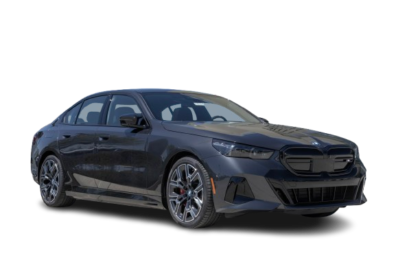
The BMW i5 represents a significant addition to the luxury electric vehicle market, offering a blend of performance, range, and comfort that caters to discerning drivers. This model stands out with its impressive capabilities and refined features.
The BMW i5 comes in two main variants, each offering distinct performance characteristics. The entry-level eDrive40 model features a single electric motor that delivers 335 horsepower to the rear wheels. While it may not match the rapid acceleration of some competitors, it still impresses with a 0-60mph time of 5.6 seconds, as measured in independent testing. This performance level is more than adequate for most driving scenarios.
For those seeking more exhilarating performance, the M60 model steps up with a dual-motor setup producing a formidable 593 horsepower. This configuration enables the M60 to accelerate from 0-62mph in just 3.8 seconds, rivalling the performance of more expensive electric sports sedans.
The i5’s handling characteristics are noteworthy, particularly in the M60 variant. It comes standard with adaptive suspension and a four-wheel steering system, enhancing both low-speed manoeuvrability and high-speed stability. The M60 exhibits minimal body lean and offers precise, weighty steering that inspires confidence during cornering.
Range is a crucial factor for electric vehicles, and the BMW i5 performs admirably in this aspect. The eDrive40 model leads the lineup with an official range of up to 357 miles on a single charge. This places it competitively within the luxury electric sedan segment, though it falls slightly short of some rivals.
In real-world winter range tests, the eDrive40 achieved 253 miles on a full charge, with an efficiency of 3.1 miles per kWh. While this figure is lower than the official range, it’s important to note that cold weather conditions typically reduce electric vehicle range.
The performance-oriented M60 xDrive model offers an official range of 315 miles, balancing high performance with respectable range.
The interior of the BMW i5 exemplifies luxury and technology integration. The cabin boasts high-quality materials and excellent build quality, surpassing some of its competitors in terms of fit and finish. Soft, padded surfaces on the dashboard and glossy trim finishes contribute to a premium ambience.
Comfort is a priority in the i5, with supportive front seats that come with standard electric adjustment for height and backrest angle. However, it’s worth noting that adjustable lumbar support is an extra-cost option on the entry-level Sport Edition trim.
The i5’s infotainment system is a standout feature, combining a 12.3-inch digital instrument panel with a 14.9-inch central touchscreen in a single curved housing. This setup runs the latest iDrive software, offering sharp graphics, quick responses, and user-friendly operation. The system can be controlled via touch or a rotary interface, providing flexibility for user preferences.
Practicality is another strong suit of the i5. The rear seats offer ample space for tall passengers, with better thigh support and a higher seating position compared to some competitors. The boot capacity is generous at 490 litres, accommodating seven suitcases in practical testing.
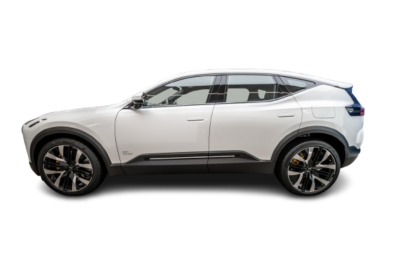
The Polestar 3 stands as a formidable contender in the luxury electric SUV market, rivalling the likes of the BMW iX and Audi Q8 e-tron. Despite its substantial size and weight of approximately 2600kg, Polestar claims this E-segment SUV ‘feels more like a sports car’.
At launch, the Polestar 3 comes with a dual-motor all-wheel drive powertrain. The Long Range Dual Motor model with the Performance pack boasts impressive outputs of 510bhp and 671lb ft of torque, matching the much pricier BMW iX xDrive50. The power distribution is slightly rear-biased, with a 245bhp/272bhp front-to-rear split.
For those seeking a less potent option, the standard dual-motor powertrain delivers 483bhp and 620lb ft of torque. Both variants offer more than sufficient power for most drivers transitioning from combustion-powered alternatives.
In terms of acceleration, the Performance pack-equipped model can sprint from 0-62mph in 4.7 seconds, while the standard dual-motor version takes an additional three tenths. All models have a top speed of 130mph.
To enhance efficiency and driving dynamics, Polestar has incorporated a unique ‘dual-clutch’ torque vectoring unit on the rear axle for dual-motor cars. Developed by BorgWarner, this system allows the rear motor to completely disconnect during low-demand scenarios, marking the first application of such technology in an electric vehicle.
The Polestar 3 impresses with its range capabilities. The standard dual-motor variant boasts an official WLTP range of 390 miles, while the Performance Package model offers 349 miles. These figures are nearly identical to those of the BMW iX in xDrive50 and M60 forms, respectively.
Energy consumption is rated at 38.9kWh per 100 miles for the ordinary dual-motor spec, with the Performance pack car using slightly more at 43.2kWh/100 miles. Notably, the Polestar 3’s range calculation system has proven to be more accurate than most in real-world conditions.
Charging capabilities are equally impressive. The Polestar 3 can charge from 10-80% in just 30 minutes when connected to a DC fast charger, thanks to its 250kW peak charge rate. This charging speed is 55kW faster than the range-topping BMW iX, giving the Polestar 3 an edge in terms of rapid charging.
Stepping inside the Polestar 3 reveals a cabin that exudes luxury and sophistication. The interior features an abundance of high-quality materials, including black ash wood, repurposed aluminium, and plush leather. While maintaining Polestar’s focus on sustainability, the 3 offers a more conventional luxury feel compared to other models in the range.
The Polestar 3 offers six distinct interior themes, each combining a carefully matched colour palette with innovative, responsibly sourced materials. Upholstery options include Nappa leather, available in Zinc, Charcoal, or Jupiter colours, as well as more sustainable alternatives like MicroTech (a vegan leather alternative) and wool.
The cabin’s layout is designed for a connected and in-control experience, with great visibility in all directions and a completely flat floor that adds to the spacious feeling. Both front seats come with individually controlled electric heating as standard. The rear seats offer the same level of comfort as the front, with extra legroom and optional heating for the outer seats.
At the heart of the interior is a 14.5-inch portrait infotainment display, running on the Android Automotive system with Polestar’s unique skin. The system features split-screen functionality and customisable widgets for a more fluid user experience.
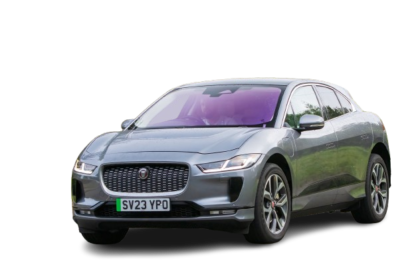
The Jaguar I-Pace stands as a formidable contender in the luxury electric SUV market, offering a compelling blend of performance, range, and interior comfort. This all-electric vehicle has positioned itself as a sportier alternative to rivals such as the Tesla Model X SUV, BMW iX3, and Mercedes EQC.
The I-Pace’s performance credentials are impressive, with two electric motors powering the front and rear wheels respectively. These motors generate a combined output of 400 horsepower, enabling the vehicle to accelerate from 0-60mph in a mere 4.5 seconds. This level of acceleration puts the I-Pace in the same league as some sports cars, making it a thrilling drive for enthusiasts.
Despite its substantial size and weight of approximately 2600kg, Jaguar claims the I-Pace ‘feels more like a sports car’ than a high-riding SUV. This sporty character is evident in its handling, with the vehicle demonstrating an eagerness to change direction and well-weighted steering that inspires confidence in corners.
The I-Pace’s performance is further enhanced by its clever engineering. The heavy batteries are tucked neatly under the floor, which helps to lower the centre of gravity and minimise body roll in tight corners. This design choice contributes significantly to the vehicle’s agile handling characteristics.
Range anxiety is a common concern for electric vehicle owners, but the I-Pace addresses this issue admirably. Jaguar claims the I-Pace can travel up to 298 miles between charges. This impressive range makes the I-Pace suitable for long-distance motorway drives, alleviating concerns about frequent charging stops during extended journeys.
It’s worth noting that real-world range may vary depending on driving conditions and usage patterns. However, the I-Pace’s range calculation system has proven to be more accurate than most in real-world conditions, providing drivers with reliable estimates of remaining range.
Stepping inside the I-Pace reveals a cabin that seamlessly blends luxury with practicality. The interior design is characterised by a clear and clutter-free layout, yet it manages to integrate numerous storage spaces throughout the vehicle. For instance, there’s a large area behind the heating controls and smaller compartments for items such as mobile phones near the central storage area under the armrest.
The I-Pace offers generous space for both front and rear passengers. The rear seats provide ample headroom and legroom, allowing occupants to stretch out comfortably. This spaciousness is particularly noteworthy given the vehicle’s sporty exterior design.
In terms of cargo capacity, the I-Pace impresses with a boot that’s slightly larger than that of Jaguar’s F-Pace SUV. The boot floor is raised slightly due to the battery placement, but this doesn’t significantly impact overall storage space. With the rear seats folded down, the I-Pace offers a substantial loading area, albeit with a slight incline rather than a completely flat floor.
Practicality is further enhanced by features such as hooks for bags, a 12V charging socket in the rear, and a boot lip design that allows for easy loading and unloading of items.
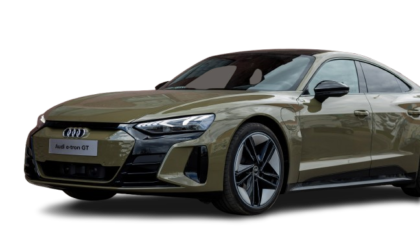
The Audi e-tron GT stands as a formidable contender in the luxury electric vehicle market, offering a compelling blend of performance, range, and interior comfort. This all-electric four-door coupe shares its underpinnings with the Porsche Taycan, boasting powerful motors and seating for five.
The e-tron GT’s performance credentials are nothing short of remarkable. The standard model produces 523 horsepower, while the RS variant ups the ante with 598 horsepower, which can be boosted to 646 horsepower during launch control. This translates to blistering acceleration, with the RS e-tron GT capable of sprinting from 0-62mph in just 3.0 seconds.
What sets the e-tron GT apart is its handling prowess. Despite weighing a hefty 2.3 tonnes, the car changes direction with remarkable agility, aided by four-wheel steering, four-wheel drive, and a rear limited-slip differential. The low centre of gravity, thanks to the batteries stored in the floor, contributes to its impressive cornering abilities.
The e-tron GT is equipped with an 84kWh battery, offering an official range of 301-305 miles. While this may not match the 400-mile range of some competitors, it proves sufficient for most driving scenarios. Real-world testing has shown the car achieving between 180-250 miles per charge, depending on driving conditions and style.
Charging capabilities are a strong suit for the e-tron GT. It supports rapid charging up to 270kW, allowing for a 5-80% charge in just 23 minutes when connected to a compatible fast charger. For home charging, an 11kW AC charger can fully replenish the battery in 9 hours and 30 minutes.
Stepping inside the e-tron GT reveals a cabin that seamlessly blends luxury with practicality. The interior design, while not as futuristic as some might expect, exudes quality with its use of high-end materials and excellent build quality. Audi has incorporated environmentally-sourced trim materials, including vegan ‘leather’ and recycled wood finishes.
The cockpit features Audi’s MMI Touch navigation system on a 10.1-inch central display, complemented by a 12.3-inch Virtual Cockpit instrument cluster. Higher trim levels and the RS variant come standard with a Bang & Olufsen 3D premium sound system, boasting 16 speakers and a 710-watt output.
Space in the rear is surprisingly generous, with good legroom thanks to scalloped front seat backs and footwells built into the battery structure. However, headroom can be tight for taller passengers, and the middle rear seat is best suited for occasional use.
The e-tron GT’s practicality is somewhat limited by its 366-litre boot capacity, which, while not tiny, is smaller than some competitors in its class. However, this aligns with its positioning as a grand tourer rather than a family hauler.
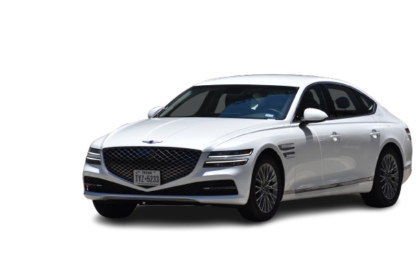 GENESIS G-80 Performance
The Genesis G80 Electrified Luxury offers impressive performance credentials. It boasts a total power output of 272 kW (365 hp) and a substantial torque of 516 lb-ft. This all-wheel-drive electric vehicle can accelerate from 0 to 62 mph in just 4.9 seconds, demonstrating its sporty capabilities. The G80 Electrified Luxury has a top speed of 140 mph, making it competitive in the luxury electric vehicle segment.
The G80’s performance is enhanced by its sophisticated engineering. It features a multi-charging system that can handle both 400 V fast charging and 800 V ultra-fast charging, reducing charging times significantly. The vehicle also incorporates a rear-wheel steering system, which adjusts the rear wheels based on driving conditions to enhance stability and manoeuvrability.
The Genesis G80 Electrified Luxury is equipped with an 87.2 kWh lithium-ion battery, of which 82.5 kWh is usable. This battery capacity translates to an impressive electric range. The official WLTP range for the G80 Electrified Luxury is 323 miles. However, real-world range estimations vary depending on driving conditions.
In city driving with mild weather, the G80 can achieve up to 390 miles, while highway driving in cold weather may reduce the range to about 195 miles. The combined real-world range estimation falls between 230 miles in cold weather and 310 miles in mild weather.
The G80 Electrified Luxury’s energy consumption is estimated at about 300 Wh per mile, which is equivalent to a fuel consumption of 135 mpg in a traditional petrol car. This efficiency can vary based on factors such as climate, terrain, and driving style.
The interior of the Genesis G80 Electrified Luxury is a testament to the brand’s commitment to premium quality and comfort. The cabin is inspired by the ‘beauty of white space’ concept, creating a refined, spacious, and tranquil environment. The G80’s interior quality is competitive with luxury brands like Mercedes, featuring high-quality materials throughout.
The G80 offers a sophisticated infotainment system centred around a 14.5-inch touchscreen display. This system is complemented by a user-friendly rotary controller on the centre console, although some users might find its positioning a bit deep for comfortable use. The digital instrument cluster is an 8.0-inch display, which can be configured with a 3D effect.
In terms of space, the G80 provides ample room for both front and rear passengers. The rear seats offer generous legroom, making it comfortable for long drives. However, taller passengers might find the headroom slightly limited due to the car’s coupe-like roofline. The boot capacity, at 424 litres, is somewhat smaller compared to some competitors in its class.
The electric luxury car market has seen remarkable growth, with automakers pushing the boundaries of performance, range, and comfort. From the lightning-fast Porsche Taycan to the spacious BMW i5, each vehicle offers a unique blend of features to cater to different preferences. The Polestar 3 and Jaguar I-Pace bring sporty handling to the SUV segment, while the Audi e-tron GT and Genesis G80 Electrified Luxury showcase the potential of electric grand tourers.
As we look ahead, these top-tier electric vehicles are set to shape the future of luxury transportation. They not only provide eco-friendly alternatives but also deliver exhilarating driving experiences. With ongoing advancements in battery technology and charging infrastructure, we can expect these vehicles to become even more practical and appealing to a wider range of consumers. The luxury electric car market is clearly charged up and ready to take on the road ahead.
Ready to upgrade your luxury vehicle? Or want to find out more about our deals? Contact us today or call direct 01642 793444 to find the perfect leasing option for you. View our full range online.
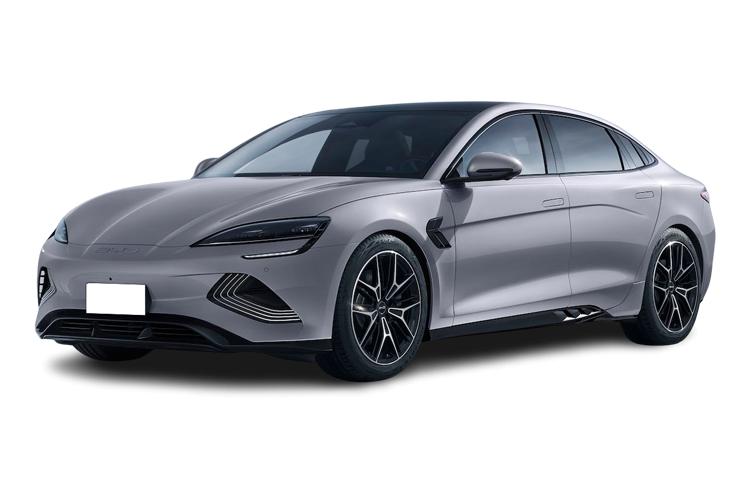
BYD SEAL
230kW Design 83kWh 4dr Auto
£360.15
per month excl. VAT
Initial rental £4,321.80
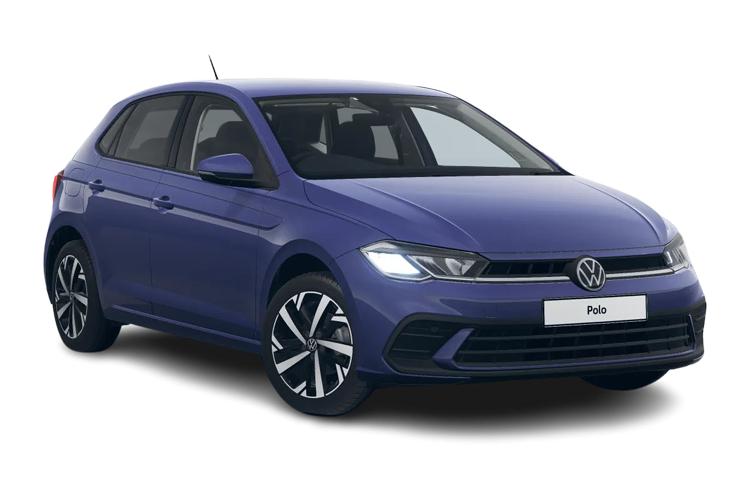
Volkswagen POLO
1.0 TSI Match 5dr
£343.65
per month excl. VAT
Initial rental £4,123.80
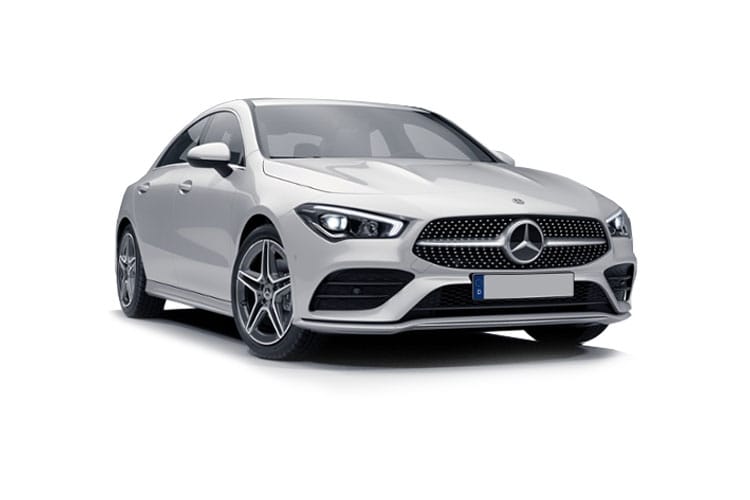
Mercedes-Benz CLA
CLA 250+ 200kW EQ AMG Line Prem Ed 85kWh
£739.32
per month excl. VAT
Initial rental £8,871.84
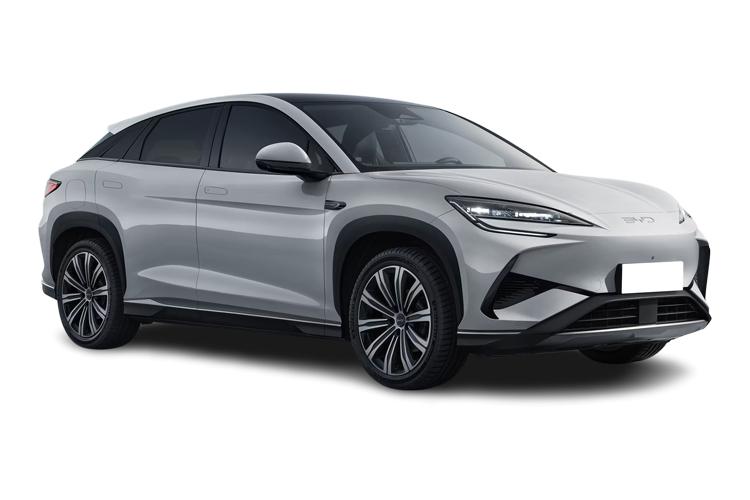
BYD Sealion 7
390kW Design 83kWh
£416.8
per month excl. VAT
Initial rental £5,001.60
BYD SEAL
230kW Design 83kWh 4dr Auto
£360.15
per month excl. VAT
Initial rental £4,321.80
Volkswagen POLO
1.0 TSI Match 5dr
£343.65
per month excl. VAT
Initial rental £4,123.80
Mercedes-Benz CLA
CLA 250+ 200kW EQ AMG Line Prem Ed 85kWh
£739.32
per month excl. VAT
Initial rental £8,871.84
BYD Sealion 7
390kW Design 83kWh
£416.8
per month excl. VAT
Initial rental £5,001.60